
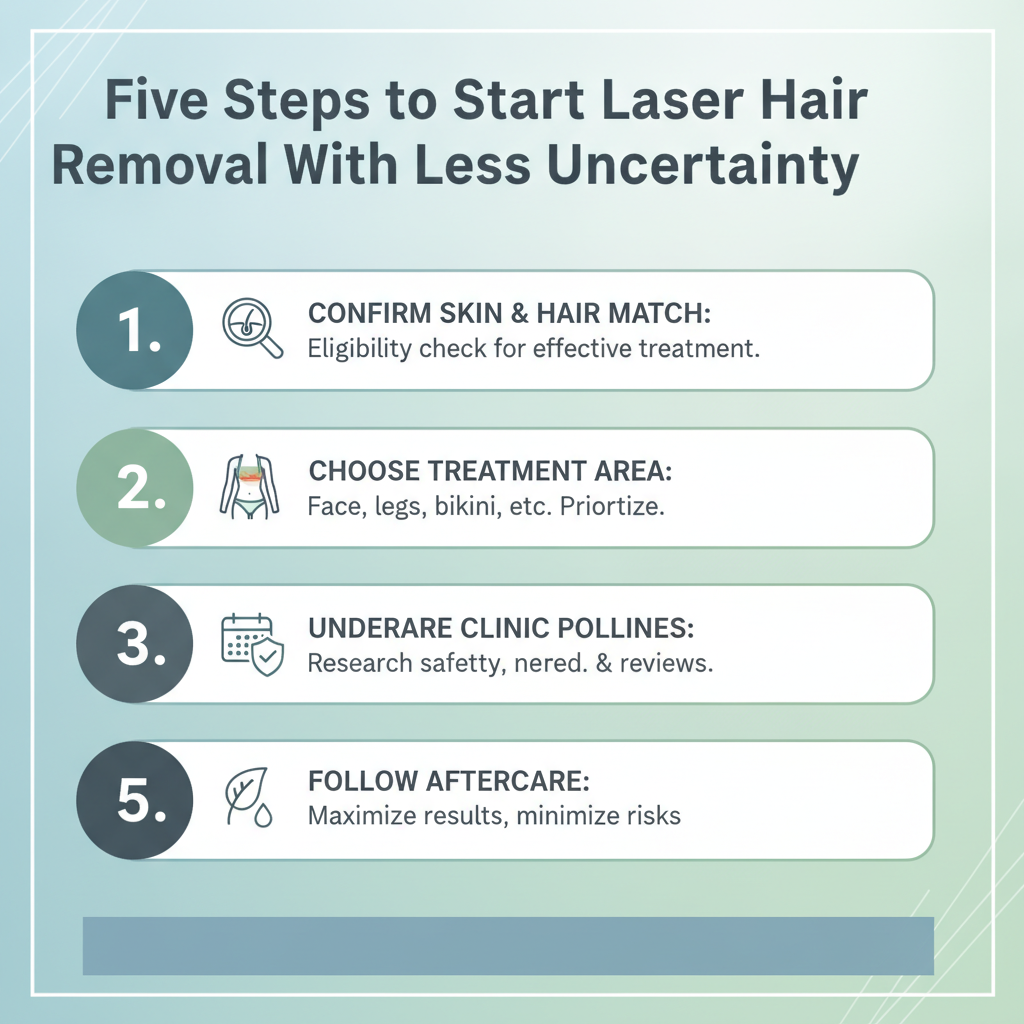
Laser hair removal with safer, clearer treatment planning
Telehealth has changed how patients prepare for aesthetic treatments, including laser hair removal. While the laser procedure itself must be performed in person by a trained provider, much of the early decision-making can begin remotely: reviewing goals, screening skin and hair factors, discussing medications, explaining preparation, and helping patients understand whether laser hair reduction is likely to suit them.
For readers comparing options, the core principle remains the same: safer treatment starts with clearer planning. A useful clinical overview of laser hair removal with safer, clearer treatment planning explains why skin tone, hair colour, treatment area, comfort level, and long-term goals should be assessed before treatment settings are chosen.
From a telehealth perspective, this matters because the first conversation should not feel like a sales call for a fixed package. It should help patients understand how laser hair removal works, what can and cannot be assessed virtually, when an in-person evaluation is required, and what questions to ask before committing to a treatment plan.
What Laser Hair Removal Does
Laser hair removal uses controlled light energy to heat active hair follicles. The goal is to reduce future hair growth so treated hair becomes finer, slower-growing, and, for many patients, significantly reduced over a planned course of care. Because hair grows in cycles, one appointment cannot target every follicle at the same growth stage.
The most responsive hair is usually darker and coarser because it contains more pigment for the laser to target. Very light, grey, white, or some red hair may respond differently. This is why both virtual and in-person consultations should focus on realistic expectations before a patient begins treatment.
Patients looking for treatment-area information can review Laser Hair Removal details, including common areas such as underarms, legs, face, back, bikini, and full body.
Quick Telehealth Checklist: Laser Hair Removal
- Best first step: A consultation that reviews skin tone, hair colour, treatment area, medical history, recent tanning, and hair removal habits.
- What can be discussed remotely: Goals, preparation, general suitability, expected treatment rhythm, comfort concerns, and pricing questions.
- What needs in-person assessment: Final device settings, skin response, treatment-area examination, and provider-led safety checks.
- Common reasons patients seek treatment: Less shaving, fewer ingrown hairs, reduced waxing irritation, and longer-term hair reduction.
- Important reminder: Telehealth can support planning, but laser treatment itself must be performed in a clinical setting.
How Telehealth Supports Better Laser Hair Removal Planning
A virtual consultation can help patients become more informed before they arrive at a clinic. During this conversation, a provider or clinic representative may review the patient’s goals, explain how the technology works, and identify factors that may affect timing or suitability.
For example, recent waxing, threading, or plucking can interfere with treatment because the laser needs a hair shaft below the skin to target. Recent tanning can also affect how safely laser energy is absorbed. A telehealth appointment gives patients time to adjust their preparation before an in-person visit.
Telehealth is also useful for expectation-setting. Patients can ask whether their hair colour is likely to respond, how treatment spacing generally works, and whether certain areas may require more careful planning because of sensitivity, hormones, or hair density.
What Still Requires an In-Person Visit
Laser hair removal is not a fully remote service. The provider must assess the treatment area in person, confirm that the skin is ready, choose appropriate settings, provide protective eyewear, and monitor the skin during treatment. A virtual visit can prepare the patient, but it cannot replace the clinical judgment required at the appointment.
In-person evaluation is especially important for deeper skin tones, sensitive areas, active irritation, recent sun exposure, or patients taking medications that may affect skin sensitivity. The safest approach is to use telehealth as a planning tool and the clinic visit as the final clinical checkpoint.
Questions Patients Should Ask During a Virtual Consultation
A good pre-treatment conversation should make the patient feel more prepared, not more pressured. Patients can use telehealth appointments to ask practical questions before deciding whether to move forward.
- What laser technology is used? Patients should understand why the device is appropriate for their skin tone, hair type, and treatment area.
- Who performs the treatment? Laser hair removal should be performed by trained professionals using appropriate clinical protocols.
- How are treatment settings selected? Settings should be based on assessment, not chosen before the provider understands the patient’s skin and hair.
- How many visits might be needed? Patients should know that hair cycles require a series of treatments, though individual timelines vary.
- What happens if more care is needed? Ask about touch-up policies, maintenance, and whether pricing is based on fixed packages or actual treatment needs.
- What preparation is required? Shaving, sun exposure, skincare products, and recent waxing habits should all be reviewed.
Technology, Comfort, and Skin Tone Considerations
Many patients search for pain-free laser hair removal, but comfort depends on several factors: the device, the technique, the treatment area, skin sensitivity, and the patient’s individual tolerance. Some systems use cooling and gradual heating to make treatment more comfortable than older methods or waxing.
Royal Laser and Skincare Clinic uses the Soprano Ice system, a diode laser platform described by the clinic as designed for comfortable treatment across diverse skin tones. Regardless of device, patients should expect a provider to review skin tone, hair colour, recent tanning, sensitivity, and medical history before proceeding.
Men considering larger or coarser areas such as the back, chest, shoulders, or neck can review dedicated guidance through Laser Hair Removal for Men.
Laser Hair Removal Compared With Shaving and Waxing
Telehealth consultations often reveal that patients are not only looking for smoother skin. They may be trying to reduce razor bumps, ingrown hairs, irritation, or the inconvenience of frequent grooming. Understanding the differences between shaving, waxing, and laser treatment helps patients choose the option that fits their goals.
Shaving
Shaving cuts hair at the skin surface. It is quick and inexpensive, but results are temporary. Some patients experience stubble, razor bumps, cuts, or irritation, especially in sensitive areas.
Waxing
Waxing removes hair from the root and can provide longer-lasting smoothness than shaving. However, it requires regrowth before the next appointment and can cause discomfort, redness, or ingrown hairs for some patients.
Laser Hair Removal
Laser treatment targets follicles over a planned series of visits. Results build gradually, but the goal is longer-term reduction rather than short-term removal. For patients tired of repeated shaving or waxing cycles, this can make laser hair removal worth discussing during a consultation.
Digital Intake: What Patients Should Be Ready to Share
A strong telehealth intake form or virtual consultation should collect details that help the provider identify potential concerns before the patient arrives. Patients should answer honestly, even if the information seems unrelated to hair removal.
- Recent tanning or sun exposure: Tanned or sun-sensitive skin may require delaying treatment.
- Current medications: Some medications can affect light sensitivity or skin response.
- Skin conditions or irritation: Active rashes, breakouts, burns, or inflammation should be discussed before treatment.
- Hair removal habits: Waxing, threading, or plucking can remove the target the laser needs.
- Hormonal concerns: PCOS, hirsutism, or sudden changes in facial hair may affect the treatment timeline.
- Past laser experience: Previous reactions, discomfort, or incomplete results can help guide the next plan.
Pricing Conversations Belong Early in the Process
Cost clarity is part of good patient communication. Laser hair removal prices can vary based on treatment area, hair density, number of visits, technology, and follow-up policy. Telehealth can help patients compare options before they book an in-person session.
Patients should ask whether they are buying a fixed number of sessions or entering a result-based care model. A fixed package may be simple to understand, but it may not reflect every patient’s response. Some areas progress more quickly, while others may need more support because of coarse growth, hormones, or larger treatment zones.
Royal Laser and Skincare Clinic states that it uses a pay-only-for-what-you-need model and includes lifetime free touch-ups under its clinic policy. Patients reviewing budgeting factors can visit Laser Hair Removal Prices before booking a consultation.
How to Prepare After a Virtual Consultation
Once a patient has completed an online or phone consultation, the next step is usually preparation for the clinic visit. Instructions may vary by provider, but several common points are worth discussing in advance.
- Shave before treatment if instructed: Shaving leaves the hair shaft below the skin, while waxing removes the target needed for laser energy.
- Avoid waxing, threading, or plucking: These methods can interfere with the laser’s ability to target the follicle.
- Limit tanning and sun exposure: Recent sun exposure can affect treatment timing and safety.
- Pause irritating skincare when advised: Strong exfoliants or active products may need to be avoided around treatment, especially on the face.
- Report changes before the appointment: New medications, irritation, burns, or sensitivity should be disclosed before treatment begins.
Where Laser Hair Removal Fits in a Broader Skin Plan
Laser hair removal often overlaps with skincare goals. Patients dealing with ingrown hairs, razor bumps, dark shadowing, or repeated friction from shaving may be interested in reducing hair growth as part of a broader skin-health strategy.
Some patients also ask about facial care, texture, congestion, or dullness. These concerns should be discussed separately so treatments are sequenced safely. If facial or skincare services are recommended, they should support the patient’s skin goals rather than feel like unnecessary add-ons. Patients can review available Facial Treatments when considering a broader care plan.
FAQs for Telehealth Patients Considering Laser Hair Removal
Can laser hair removal be done through telehealth?
No. The treatment itself must be performed in person. Telehealth can support consultation, education, screening, preparation, and follow-up questions.
Can a provider tell if I am a candidate during a virtual visit?
A virtual visit can help identify whether laser hair removal may be appropriate, but final suitability and treatment settings should be confirmed in person.
Can I shave between appointments?
Shaving is usually allowed because it does not remove the hair shaft below the skin. Waxing, threading, and plucking are typically avoided during a laser treatment plan.
Is laser hair removal suitable for all skin tones?
Laser hair removal across skin tones depends on the technology used, provider training, settings, skin assessment, and timing around sun exposure. Patients with deeper skin tones should ask specifically how the clinic adjusts care for their skin.
Will I need touch-ups later?
Some patients may need maintenance because hair growth can be influenced by hormones, age, and dormant follicles. This is why touch-up policies should be discussed before starting treatment.
A Smarter First Step
For telehealth patients, the best laser hair removal journey begins before the first pulse of light. A thoughtful consultation can clarify skin and hair suitability, preparation steps, comfort expectations, pricing structure, and long-term maintenance policies.
If you are comparing clinics, use the first conversation to ask direct questions: What technology is used? Who performs the treatment? How are settings selected? What happens if progress takes longer than expected? Clear answers help patients move from uncertainty to informed decision-making.
To discuss treatment areas, skin tone, hair type, and comfort concerns with Royal Laser and Skincare Clinic, visit the clinic’s contact page to book a consultation.