
How a PPC Specialist Helps Telehealth Providers Build Clearer Paid Search Campaigns
For telehealth providers, paid search can be a useful way to reach people who are actively looking for virtual appointments, online consultations, remote monitoring, prescription support, mental health services, or other digital care options. A ppc specialist helps make those campaigns more structured, measurable, and aligned with patient intent rather than simply buying clicks.
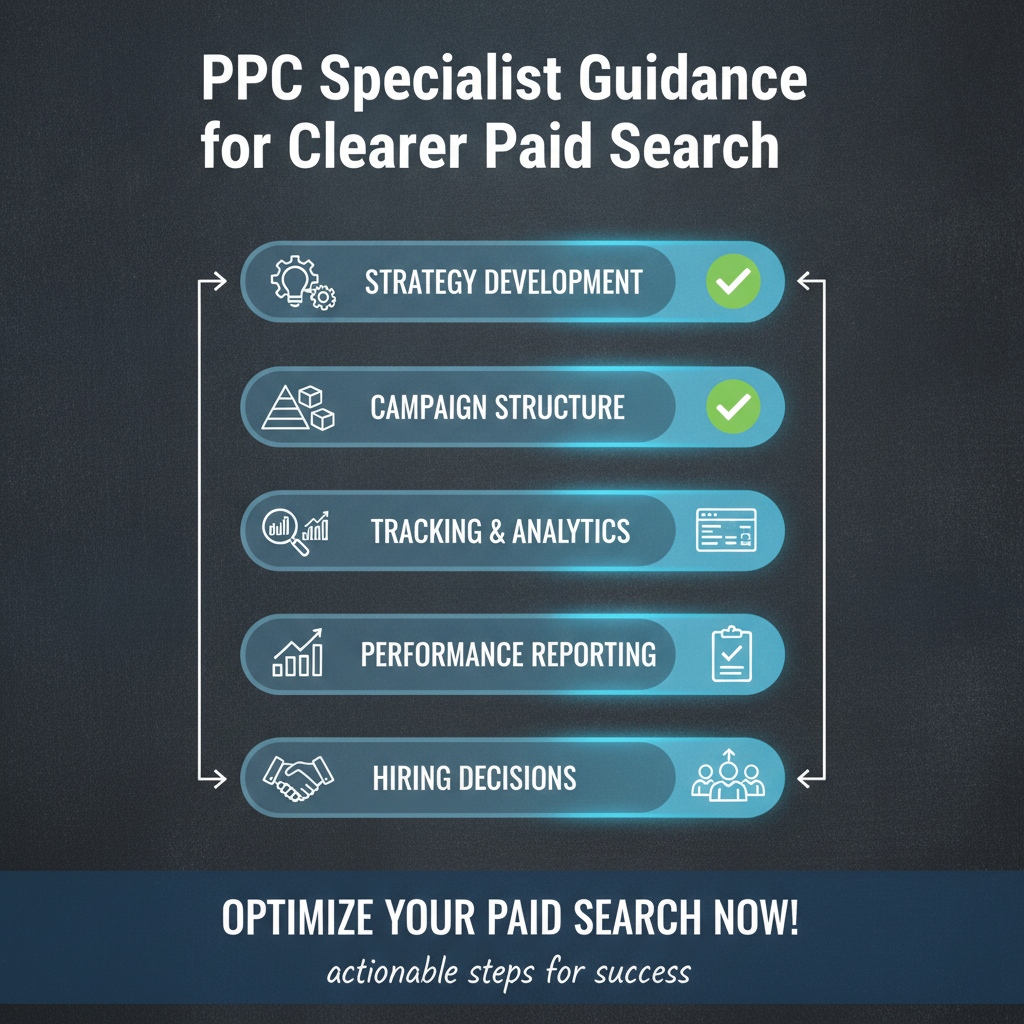
The broader role of a PPC specialist is explained in Zigma Internet Marketing’s original guide to ppc specialist guidance for clearer paid search, and the same principles become especially important in telehealth, where campaigns must balance visibility, trust, compliance awareness, appointment quality, and responsible messaging.
In a telehealth context, PPC is not only about increasing traffic. The more useful question is whether paid search is helping the right patients or clients find the right care pathway, understand the service clearly, and take an appropriate next step such as booking a virtual visit, submitting an intake form, calling a clinic, or learning whether the service is suitable for their needs.
Quick Facts: PPC Specialist for Telehealth
- What: A PPC specialist manages paid search campaigns across keywords, ads, budgets, landing pages, tracking, and reporting.
- Who: Telehealth clinics, virtual care platforms, digital health startups, remote therapy providers, specialty practices, and hybrid medical offices may use PPC to reach patients searching for care.
- Where: PPC work commonly happens in platforms such as Google Ads, Microsoft Ads, Google Analytics 4, Google Tag Manager, Merchant Center when relevant, and reporting dashboards.
- How: Campaigns are improved through search query reviews, negative keywords, landing page alignment, conversion tracking, ad testing, and performance interpretation.
- Why: Strong PPC management helps telehealth marketers reduce irrelevant spend, clarify patient intent, and evaluate whether paid traffic is producing meaningful actions.
Why PPC Needs Extra Clarity in Telehealth Marketing
Telehealth searches often include a mix of urgent needs, research questions, insurance or pricing concerns, location-based requirements, and service-specific intent. Someone searching for “online doctor appointment” may be ready to book, while someone searching for “how does virtual care work” may still be learning. A PPC specialist helps separate those intent levels so ads, landing pages, and budgets are not treated as one generic traffic source.
This matters because virtual care is a trust-based service. Patients need to understand what is offered, who the service is for, what the next step is, and whether the provider appears credible. If an ad promises one thing and the landing page explains something different, the campaign may attract clicks without generating useful appointments or inquiries.
A PPC specialist also helps telehealth teams avoid overly broad campaigns that spend budget on searches unrelated to the actual service. For example, a virtual physiotherapy clinic, an online mental health provider, and a primary care telehealth platform may all use paid search, but they should not target or measure every healthcare-related search the same way.
What a PPC Specialist Actually Does for a Telehealth Campaign
A PPC specialist plans, builds, monitors, and improves pay-per-click campaigns. In telehealth, that work usually includes keyword research, campaign structure, audience considerations, search term reviews, ad copy testing, budget allocation, landing page feedback, and conversion tracking.
The work begins before ads go live. A specialist needs to understand the service model: Is the provider offering virtual urgent care, ongoing therapy, remote specialist consultations, online prescription support, chronic care management, or another type of digital health service? The answer affects the campaign structure, keywords, ad messaging, and conversion goals.
After launch, the specialist reviews how real searchers interact with the campaign. Clicks alone are not enough. Useful PPC management asks whether the campaign is generating qualified appointment requests, calls, forms, patient registrations, or other actions that the organization can actually respond to and measure.
For organizations comparing paid search with broader digital strategy, Zigma Internet Marketing connects PPC with Digital Marketing Services so paid media, SEO, website structure, analytics, and conversion planning can work together.
Search Intent: The Core of Telehealth PPC
Search intent is especially important in healthcare-related advertising because users may be at very different stages of decision-making. Some people are ready to book a virtual consultation. Others are comparing providers, checking availability, researching symptoms, or trying to understand whether telehealth is appropriate for their situation.
A PPC specialist reviews the difference between keywords selected by the advertiser and the actual search terms people type into Google or other search engines. This search query review helps identify irrelevant clicks, unclear demand, and opportunities to build more precise campaigns.
Negative keywords are part of this process. If a campaign attracts searches for jobs, training programs, free templates, unrelated conditions, DIY advice, or services the provider does not offer, the specialist can add exclusions so the same poor-fit clicks do not keep spending budget.
When Zigma Internet Marketing provides Google Ads Management, PPC data is reviewed alongside campaign goals, tracking setup, landing pages, and the business outcome the campaign is supposed to support.
Landing Pages Matter More Than the Click
A paid search ad can bring a potential patient to a website, but the landing page determines whether that visitor understands the offer and takes the next step. In telehealth, landing pages need to be clear, accessible, mobile-friendly, and aligned with the search that brought the visitor there.
A PPC specialist may not be the person designing the entire website, but they should be able to identify landing page issues that affect campaign performance. Common concerns include unclear service descriptions, forms that ask too much too soon, weak calls to action, limited trust signals, slow pages, and poor message match between the ad and the page.
For example, a campaign promoting virtual therapy should not send every visitor to a generic homepage if the search intent is specific. A more relevant landing page may explain the service, the appointment process, eligibility considerations, provider information, and the next step in clearer language.
Telehealth organizations that need stronger landing pages can connect PPC planning with Website Design & Development so paid traffic is not sent into a weak or confusing user journey.
Conversion Tracking for Virtual Care Campaigns
Conversion tracking tells a telehealth organization what happened after the click. Did the visitor book an appointment, start an intake form, call the office, request a consultation, download information, or leave without taking action? Without accurate tracking, PPC reports can make a campaign look active without showing whether it is useful.
A PPC specialist helps define which actions matter. Not every action has the same value. A booked appointment may be more important than a newsletter signup. A completed intake form may be more useful than a short page visit. A phone call may need to be evaluated differently from a form submission, depending on the care model and administrative process.
Tracking also needs to be interpreted carefully in healthcare and telehealth environments. Campaign data should support decision-making without encouraging misleading measurement or overvaluing low-quality interactions. A PPC specialist should be able to explain what is being tracked, why it matters, and how it connects to the provider’s actual intake or booking process.
PPC Specialist vs Platform Automation
Advertising platforms now include automated bidding, broader matching, asset recommendations, and campaign types that use machine learning. These tools can be useful, but they still need strategic direction. In telehealth, poor inputs can lead automation toward conversions that are easy to generate but not necessarily valuable.
Manual Control
Manual control gives the PPC specialist closer oversight of keywords, match types, exclusions, budgets, and ad copy. This can be useful when a telehealth provider needs careful targeting, limited geographic reach, or strict separation between different services.
Platform Automation
Automation can help adjust delivery based on available signals, but it works best when conversion tracking is clean, campaign goals are well-defined, and the account has enough reliable data to guide decisions.
Hybrid Management
Many telehealth campaigns benefit from a hybrid approach. The PPC specialist sets the structure, tracking, negative keywords, landing page direction, and reporting priorities, then uses automation where it supports the campaign goal rather than replacing human judgment.
Skills to Look for in a Telehealth PPC Specialist
A strong PPC specialist should understand more than how to launch ads. Telehealth campaigns require attention to patient intent, service accuracy, website experience, analytics, and responsible messaging.
- Search intent mapping: The specialist should group keywords by user need, not only by similar wording.
- Negative keyword discipline: Irrelevant healthcare-related searches should be reviewed and excluded where appropriate.
- Conversion tracking knowledge: Calls, forms, bookings, and other actions should be measured in a way that reflects real business or intake value.
- Landing page awareness: The specialist should recognize when the page after the click is limiting results.
- Plain-language reporting: Reports should explain what changed, what was learned, and what action comes next.
- Policy and messaging awareness: Healthcare-related ads need careful wording, clear service descriptions, and attention to platform requirements.
How to Evaluate a PPC Specialist Before Hiring
1. Ask How They Define a Valuable Conversion
A good specialist should ask which actions matter most to the telehealth organization. Appointment bookings, qualified consultation requests, phone calls, patient registrations, and soft engagement signals should not all be treated equally.
2. Ask How They Review Search Terms
Search term reviews reveal whether the campaign is attracting the right audience. Listen for practical explanations about irrelevant intent, budget leakage, and negative keyword decisions.
3. Ask Whether Landing Pages Are Included in the Review
PPC performance depends heavily on what happens after the click. A specialist should be willing to review page clarity, mobile usability, message match, form friction, and calls to action.
4. Ask How Reporting Leads to Decisions
A useful PPC report should not only list impressions, clicks, and cost per click. It should explain what changed, what was tested, what improved, what declined, and what will be adjusted next.
5. Ask About Account and Data Ownership
Telehealth organizations should understand who owns the ad account, analytics setup, tags, landing pages, and historical performance data. Clear access and documentation make future audits and improvements easier.
How PPC and SEO Work Together for Telehealth Providers
PPC and SEO solve different visibility problems. PPC can test search demand, ad messaging, and landing page performance relatively quickly once campaigns are approved. SEO builds longer-term visibility through useful content, technical structure, relevance, and authority.
For telehealth providers, the two channels can inform each other. PPC search terms may reveal which services people actively look for, while SEO content can answer recurring educational questions that may not be ideal for paid traffic. A high-intent paid keyword may deserve a dedicated landing page, while a research-heavy query may be better suited to an educational article.
Zigma Internet Marketing supports this type of coordination through SEO Services, PPC management, analytics, content planning, and conversion-focused web work.
Common PPC Mistakes in Telehealth Campaigns
- Using broad healthcare keywords without guardrails: General health terms can attract research traffic that does not match the provider’s service.
- Sending all traffic to the homepage: Specific telehealth searches usually need specific landing pages.
- Tracking every action as equal: A form start, appointment booking, phone call, and newsletter signup may represent very different levels of intent.
- Ignoring lead or appointment quality: Platform conversions should be compared with real intake outcomes where possible.
- Using unclear ad copy: Ads should help users understand the service before they click, not after.
- Separating PPC from website and SEO strategy: Paid search performs better when it is connected to the broader patient journey.
What Useful PPC Reporting Should Include
Good PPC reporting should explain cause and effect. If spend increased, the report should clarify whether the change came from more search volume, broader targeting, a new test, changes in conversion rate, or competitive auction conditions.
Reports should separate activity metrics from outcome metrics. Clicks, impressions, click-through rate, and cost per click show campaign movement. Booked appointments, qualified forms, calls, conversion rate, cost per acquisition, and other business-relevant actions show whether that movement was useful.
Most importantly, reporting should lead to decisions. A telehealth team should be able to understand what the specialist changed, why it was changed, and what will be tested next.
When a Telehealth Provider May Not Be Ready for PPC
Not every telehealth organization should scale paid search immediately. PPC can expose weaknesses quickly if the offer is unclear, the website is not ready, intake processes are inconsistent, or tracking is incomplete.
Before increasing spend, a provider may need to improve landing pages, clarify service descriptions, set up accurate conversion tracking, document intake steps, or make the booking process easier for users. These improvements can make PPC data more useful and reduce confusion after the click.
Final Thoughts: Choose a PPC Specialist Who Can Explain the Patient Journey
A strong PPC specialist should be able to explain the relationship between search intent, ad messaging, landing page clarity, conversion tracking, and appointment quality. For telehealth providers, that clarity is essential because the goal is not only to generate traffic; it is to help the right users find the right virtual care pathway.
If your organization needs support reviewing paid search campaigns, landing pages, analytics, or digital marketing strategy, Zigma Internet Marketing can be reached at (647) 556-6071 or info@zigma.ca.
FAQs About PPC Specialists for Telehealth
What does a PPC specialist do for a telehealth provider?
A PPC specialist manages paid search campaigns by organizing keywords, writing and testing ads, reviewing search terms, managing budgets, improving tracking, and connecting campaign data to appointments, calls, forms, or other meaningful actions.
Can PPC help improve appointment quality, not just appointment volume?
Yes. A specialist can improve appointment quality by refining keywords, excluding irrelevant searches, aligning ad copy with the actual service, improving landing page clarity, and separating high-value conversions from low-value actions in reporting.
Should telehealth PPC campaigns use dedicated landing pages?
Often, yes. Dedicated landing pages can help match the user’s search intent more clearly than a general homepage, especially when the campaign promotes a specific virtual care service.
Does a PPC specialist only work in Google Ads?
No. Many PPC specialists also work with Microsoft Ads, analytics tools, landing page testing, remarketing, shopping feeds when relevant, and reporting dashboards. The right mix depends on the provider’s audience and goals.
What should a telehealth organization ask before hiring a PPC specialist?
Ask how conversions will be tracked, how search terms will be reviewed, whether landing pages are assessed, how reporting connects to decisions, and who owns the ad account and analytics data.
Related Topics
