
Laser Hair Removal for Dark Skin With Safe Treatment Guidance
Optimizing Laser Hair Removal for Dark Skin in Telehealth Practices
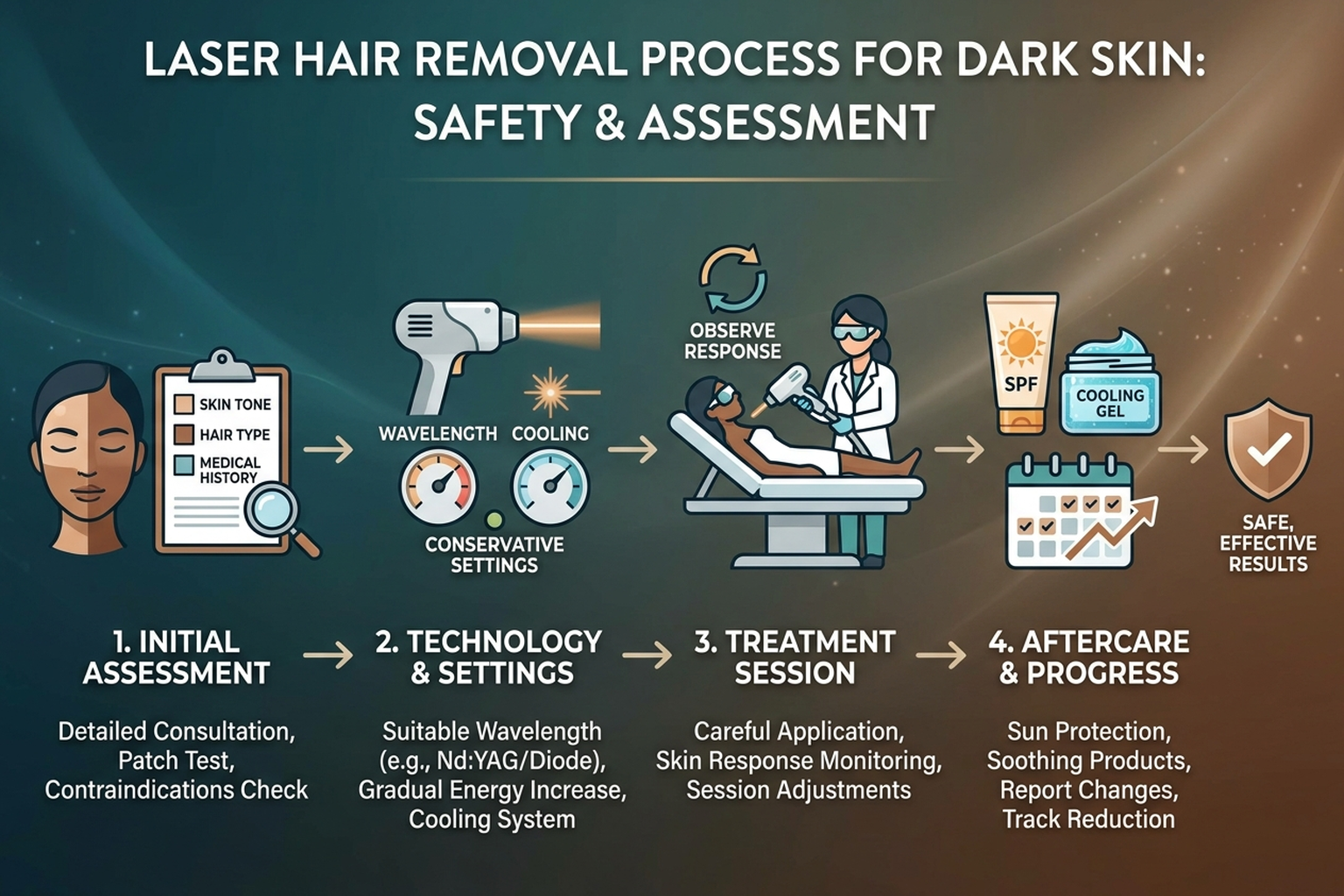
Laser hair removal technology has advanced significantly, making safe and effective treatment on darker skin tones more accessible than ever. For telehealth providers offering guidance or coordinating care, understanding how to tailor laser hair removal based on melanin levels is essential to ensuring patient safety and satisfaction. The key focus is minimizing heat absorption by the skin while targeting hair follicles efficiently. Providers performing virtual assessments must consider skin tone, recent sun exposure, hair density, and overall medical history before recommending treatment options.
Modern laser systems have become better equipped for diverse skin types by selecting wavelengths and energy settings that differentiate more precisely between pigment in the hair and skin. However, technology alone isn’t enough—real-time adjustments and conservative protocols are critical. Detailed consultations, including virtual visits or pre-treatment screenings, play a vital role in determining candidacy and customizing plans.
For more detailed treatment protocols and clinic-level application, you can explore the thorough guidance provided by Royal Laser and Skincare Clinic on laser hair removal for darker skin.
The Importance of Customized Laser Plans for Darker Skin Tones in Remote Care
Melanin concentration in the skin significantly influences how laser energy should be applied for hair removal. Since darker skin contains more melanin near the surface, laser wavelengths must be carefully chosen to avoid unwanted skin heating, which can lead to pigment changes or burns. Telehealth consultations offer a unique opportunity to gather thorough patient history and visual assessments to recommend appropriate treatments or advise referrals.
Best practices involve using lasers with longer wavelengths (such as Nd:YAG) that target hair follicles more selectively, combined with starting at low energy settings and progressing cautiously. Whether performed in-clinic or coordinated via telehealth, patch tests are a valuable tool to ensure no adverse skin reactions occur before full treatment.
Hair color also factors heavily into outcomes, with darker, coarser hair responding better than lighter shades. Providers using telehealth platforms can educate patients on realistic expectations matching their hair type and skin tone.
Key Considerations for Telehealth in Laser Hair Removal for Dark Skin
What clinicians and patients should keep in mind.
- Safety: Device choice and conservative energy settings are vital to protect melanin-rich skin from excessive heat during treatment.
- Comfort: Cooling systems in modern lasers enhance patient comfort—a factor clinicians should discuss when managing expectations remotely.
- Multiple Sessions: Hair grows in cycles; repeated treatments are necessary for effective results, which telehealth follow-ups can help schedule and monitor.
- Pre-treatment Preparation: Patients should be advised to avoid tanning, waxing, or irritating products before sessions, and telehealth consultations are ideal for delivering this guidance.
- Comprehensive Assessment: Effective telehealth evaluations cover skin tone, hair type, medications, hormonal status, and treatment goals to tailor laser plans correctly.
Technology and Telehealth: Ensuring Safe Laser Hair Removal for Darker Skin
While advanced laser platforms like the FDA-approved Soprano Ice system are designed to treat a broad range of skin tones safely, clinical expertise remains paramount. Telehealth can provide initial assessments and ongoing monitoring, but the hands-on experience of trained providers is essential to adjust settings and manage skin response dynamically after each session.
Providers should use telehealth check-ins between treatments to evaluate changes from sun exposure, skin reactions, hormonal fluctuations, or new medications that may influence parameters. This ongoing communication supports tailored, safe progression of therapy even when patients are not physically present.
For patients with extensive treatment areas or men undergoing laser hair removal for dense hair (such as back or chest hair), telehealth consultations can facilitate planning and preparation for efficient in-clinic sessions or safe at-home follow-up care.
Learn more about effective laser hair removal for men at Royal Laser and Skincare Clinic’s guide.
Identifying Telehealth-Friendly Clinics Equipped for Darker Skin
Telehealth patients often rely on remote support to determine the suitability of a laser clinic before committing. A knowledgeable clinic will transparently share information about their laser devices, treatment protocols, and protocols for managing adverse reactions such as redness or pigmentation changes.
- Initial Skin and Hair Assessment: Providers should remotely evaluate natural skin tone, sun exposure history, hair characteristics, and any scarring or pigment issues to plan treatment appropriately.
- Health Status Review: Telehealth visits should incorporate medical screening questions—for medications, skin conditions, pregnancy, or recent chemical treatments—that influence timing or contraindications.
- Realistic Scheduling: Sessions spaced according to the hair growth cycle—not for patient convenience alone—should be emphasized during telehealth consultations.
- Post-Treatment Care Instructions: Clear, personalized aftercare guidance should be provided virtually to minimize complications and support skin healing.
Clinics practicing safe laser hair removal for darker skin via telehealth will also clarify expectations about permanent hair reduction versus complete follicle removal, helping patients set realistic treatment goals.
What Telehealth Providers Should Include in Initial Laser Hair Removal Consultations
During the first virtual or in-person appointment, providers should verify pre-treatment preparation, check for recent tanning, skin irritation, or injury that might necessitate postponement, and ensure patients understand the treatment sensations and aftercare expectations.
Laser sensations vary by body area, with common descriptions including brief warmth or mild snapping. Providers can use telehealth to pre-educate patients on these feelings and recommend strategies such as cooling to enhance comfort.
Aftercare advice—avoiding hot baths, saunas, fragrance-heavy products, and direct sun exposure—is especially important to communicate clearly through telehealth platforms. Emphasizing the importance of shaving rather than waxing or plucking between sessions can also be effectively managed remotely.
Comparing Hair Removal Methods with a Telehealth Lens
Discussing the pros and cons of shaving, waxing, and laser hair removal through telehealth education sessions can help patients make informed choices aligned with their skin sensitivity and long-term goals.
| Method | Mechanism | Considerations for Dark Skin |
|---|---|---|
| Shaving | Removes hair at surface level, requiring frequent maintenance. | May cause razor bumps, ingrown hairs, and dark spots due to repeated irritation. |
| Waxing | Removes hair from root; regrowth requires repeated sessions. | Can cause inflammation, ingrown hairs, and post-inflammatory pigmentation issues. |
| Laser Hair Removal | Targets hair follicles to reduce growth over multiple sessions. | Needs specialized technology and protocols to protect melanin-rich skin safely. |
For patients experiencing frequent irritation from shaving or waxing, telehealth-guided laser hair removal may offer a long-term solution by reducing hair density and the potential cycle of skin inflammation.
Remote Guidance on Preparation and Aftercare for Laser Treatments
1. Comprehensive Skin and Medical History Sharing
Encourage patients to disclose all relevant history including prior pigment changes, eczema, scarring tendencies, and previous laser procedures during telehealth consultations. This allows providers to customize treatment plans beyond basic skin tone assessments.
2. Avoid Sun Exposure Prior to Sessions
Advise patients to refrain from tanning and protect skin with sunscreen, especially for exposed areas, to maintain baseline melanin activity and minimize risk during treatment. Telehealth reminders can help maintain compliance.
3. Shave Rather Than Remove Hair from Root
Inform patients that shaving before treatment keeps hair follicles intact for targeting, unlike waxing or plucking, which remove follicles and reduce laser efficacy.
4. Temporarily Pause Irritating Skin Products
Telehealth follow-ups should reinforce pauses on retinoids, acids, and other sensitizing agents as directed to reduce treatment complications.
5. Report Any Changes Before Sessions
Patients should update providers about medication changes, new sun exposure, skin irritation, or other factors that might impact treatment safety or timing, facilitated effectively through telehealth communication.
Essential Questions for Telehealth Clients Considering Laser Hair Removal
Good telehealth consultations encourage patients to ask:
- What laser system will you use for my skin type? Knowing the device helps build trust and safety assurance.
- Who performs the treatments and assessments? Verify provider credentials and experience.
- How do you decide on starting energy settings? Expect clear rationale based on skin tone and hair properties.
- What is the course of action if skin reacts adversely? Learn about clinic protocols, emergency contacts, and follow-up procedures.
- How is treatment progress monitored? Understand metrics such as hair shedding and regrowth timing rather than immediate session results.
Committing to Long-Term Skin Health Through Telehealth-Supported Laser Care
Integrating telehealth into laser hair removal care for darker skin tones helps ensure treatments are thoughtful and personalized—not experimental. Combining advanced laser technology, certified aestheticians, realistic outcome management, and remote aftercare monitoring strengthens safety and satisfaction.
Royal Laser and Skincare Clinic exemplifies this model, offering the Soprano Ice system and experienced providers since 2010 for clients across skin tones, with open communication supported by telehealth services where appropriate. Their approach prioritizes visible, lasting results over a fixed session count, with lifetime free touch-ups included in treatment guarantees.
For telehealth consultations, treatment inquiries, or to review laser hair removal pricing, prospective patients can contact Royal Laser and Skincare Clinic at 905-237-3242 or info@royallaserclinic.com.
Ready for a tailored telehealth skin assessment?
Discuss your unique skin tone, hair concerns, and treatment options with a certified aesthetician before moving forward.
FAQs on Laser Hair Removal for Dark Skin via Telehealth
Yes, risks such as dark or light spots and burns exist if inappropriate devices or excessive energy are used. These risks are minimized with thorough assessment, proper energy selection, sun avoidance, and close monitoring—steps that telehealth consultations can support effectively. Persistent color changes should always be evaluated by a medical professional.
Dark, coarse hair typically responds well due to higher melanin in follicles. Light blonde, red, grey, or very fine hair may absorb insufficient laser energy for predictable reduction. Telehealth assessments can help clarify hair suitability prior to treatment.
Session numbers vary depending on body area, hair density, growth cycles, hormonal factors, and response. Effective planning through telehealth allows providers to set realistic expectations based on individualized evaluation rather than generic promises.
Yes, shaving is generally recommended since it does not remove the hair follicle target. Avoid waxing, plucking, or other root removal methods unless professionally advised otherwise. Telehealth follow-ups can reinforce these instructions.
Treatment may be postponed for recent tanning, skin irritation, infections, or use of photosensitizing medications or products. Communicating any changes via telehealth enables providers to make safe decisions about treatment timing.