
Does Weather Have Any Impact on Hair Laser Removal? Telehealth Timing and Safety Tips
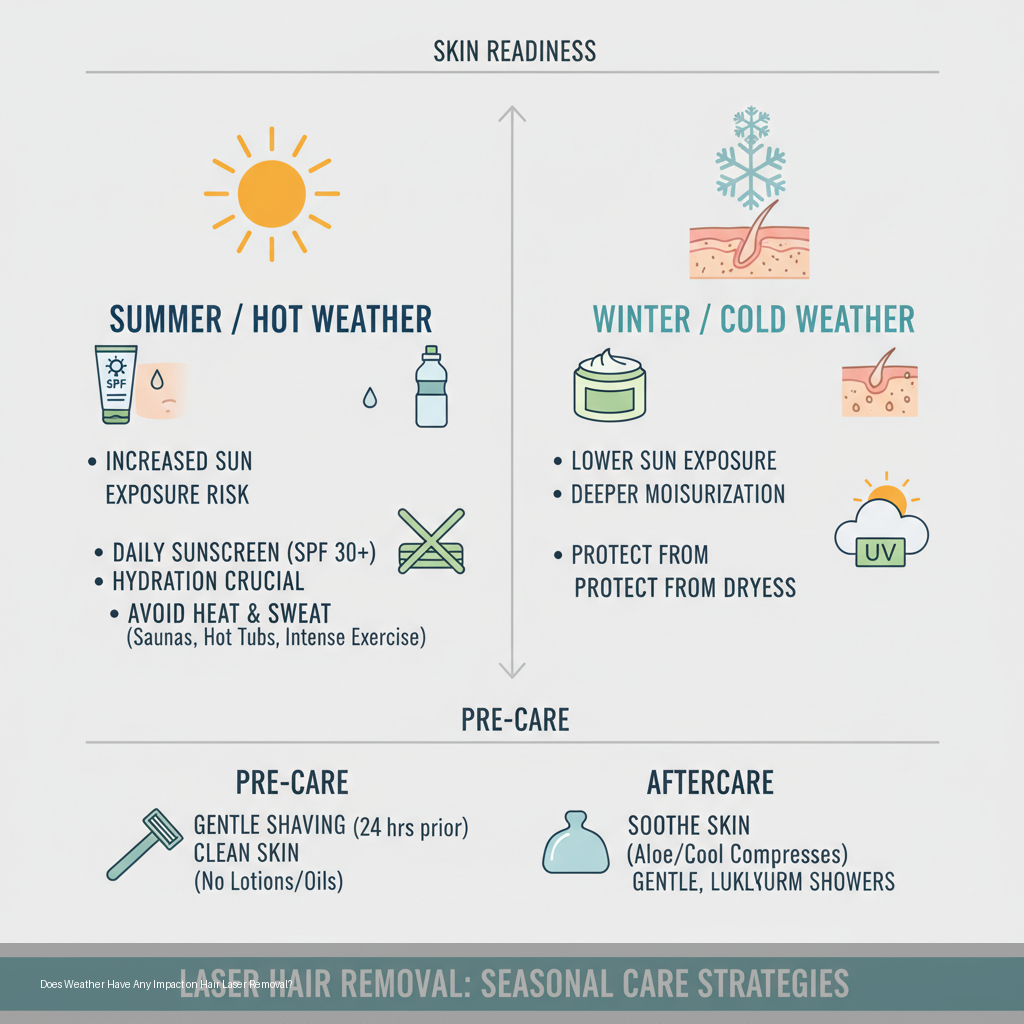
Does weather have any impact on hair laser removal? Yes, but mostly by changing the condition of your skin rather than changing how the laser works. Heat, sweat, sun exposure, cold air, dryness, and clothing friction can all affect skin sensitivity before and after treatment, which is why timing and aftercare matter.
For a clinic-focused explanation of seasonal laser timing, this guide on whether weather impacts hair laser removal explains the core point well: the best time for treatment is not simply “summer” or “winter,” but the period when your skin is calm, protected, and ready for care.
From a telehealth perspective, the practical question is: can a virtual consultation help you decide whether your skin is ready for an in-person laser hair removal appointment? In many cases, yes. A telehealth screening can help identify recent tanning, sunburn, irritation, medication or skincare concerns, and seasonal habits that may affect appointment timing.
Quick Facts: Weather, Telehealth, and Laser Hair Removal
- Weather affects skin readiness: Sun, heat, cold, dryness, and sweat can make skin more reactive.
- Laser effectiveness depends on hair and follicle targeting: Weather does not stop the laser from targeting hair follicles, but irritated or tanned skin may require caution.
- Telehealth can support pre-screening: A virtual visit may help determine whether you should proceed, delay, or adjust the treatment area.
- Exposed areas need extra planning: Face, arms, legs, shoulders, chest, and back are more likely to be affected by sun exposure.
- Aftercare is seasonal: Summer care often focuses on sun and sweat, while winter care often focuses on dryness and gentle shaving.
How Weather Changes Skin Readiness for Laser Hair Removal
Laser hair removal works by directing energy toward pigment in the hair shaft and follicle. The surrounding skin still matters because treatment is safest when the area is not sunburned, freshly tanned, broken, overly dry, inflamed, or irritated.
This is where weather becomes relevant. In warm months, patients may have more UV exposure, sweating, swimming, and friction from tighter clothing. In colder months, indoor heating and dry air can lead to flaking, itching, or razor irritation before the appointment.
A telehealth provider or clinic intake specialist can ask targeted questions before you travel to an appointment, such as whether the treatment area has been recently exposed to direct sun, whether you used self-tanner, whether shaving caused razor burn, or whether you are using active skincare products on the area.
Can Telehealth Help You Decide If It Is Safe to Keep Your Appointment?
Telehealth cannot perform the laser treatment itself, but it can be useful before and between sessions. A virtual consultation may help reduce unnecessary trips, clarify preparation instructions, and identify situations where an in-person provider should examine the skin before proceeding.
For example, if you have a fresh tan on your legs, a virtual check-in can help determine whether you should discuss delaying that area. If you have dry winter skin and shaving leaves irritation, a telehealth appointment can help you review gentle preparation steps before your scheduled visit.
Telehealth is especially helpful when patients are unsure whether a normal seasonal change is acceptable or whether it represents a reason to reschedule. However, final treatment decisions should still be made by the qualified laser provider assessing your skin in person.
Summer Laser Hair Removal: What Patients Should Discuss Virtually
Summer does not automatically rule out laser hair removal. Many patients continue treatments during warm weather, especially on areas that are easy to protect from direct sun. The concern is not the season itself; it is recent tanning, sunburn, overheating, sweat irritation, and poor aftercare timing.
During a telehealth consultation before a summer appointment, patients should be ready to discuss:
- Recent sun exposure on the treatment area
- Any sunburn, peeling, redness, or tenderness
- Use of self-tanning products
- Outdoor plans immediately after the appointment
- Swimming, hot tubs, saunas, or intense workouts planned after treatment
- Whether the treated area can be covered with clothing or protected as instructed
For people planning Laser Hair Removal, the safest summer schedule is usually one that avoids treatment right after heavy sun exposure and allows enough time for calm aftercare.
Winter Laser Hair Removal: Easier Sun Protection, More Dryness
Winter is often considered convenient for laser hair removal because treated areas are more likely to be covered by clothing and less likely to be exposed to direct sun. That can make it easier to follow aftercare instructions, especially for legs, bikini line, underarms, back, chest, and full-body treatment plans.
The main winter issue is dry skin. Cold air, indoor heating, and long hot showers can make the skin feel tight or flaky. If the area is too dry, shaving before treatment may cause irritation, which can make the appointment less comfortable or lead the provider to delay treatment on that area.
A virtual pre-visit can help patients review moisturizing habits, shaving timing, and whether any dry patches or irritation should be assessed before the session. Patients should follow their clinic’s instructions about when to moisturize and when to arrive with clean, product-free skin.
Weather-Related Questions to Ask During a Virtual Laser Consultation
A good telehealth screening should focus on practical, treatment-day details. Patients can use the following questions to prepare for a virtual consultation:
- Have I tanned recently? A recent tan can affect how the skin responds to laser energy.
- Is the area sunburned or peeling? Sunburned or damaged skin should not be treated until recovered.
- Is my skin dry, cracked, or irritated? Dryness can make shaving and treatment more uncomfortable.
- Did I use self-tanner? Self-tanning products can change the appearance of skin pigment and should be discussed before treatment.
- Am I using retinoids, exfoliating acids, or active skincare? These products may increase sensitivity depending on the treatment area and timing.
- Do I have heat-heavy plans after my appointment? Workouts, saunas, hot tubs, and sun exposure may need to be avoided for the period your provider recommends.
Heat, Sweat, and Friction After Laser Hair Removal
After laser hair removal, the treated skin may feel warm or look slightly pink for a short time. Adding more heat through exercise, saunas, hot tubs, or direct sun can increase discomfort or irritation. Sweat and tight clothing may also aggravate freshly treated areas.
This is why telehealth aftercare instructions should be specific to the season and the body area. For example, a patient treating underarms in summer may need guidance on deodorant use and sweating. A patient treating the bikini area may need to consider clothing friction. A patient treating the face may need to coordinate sun protection and skincare products.
If redness, swelling, blistering, or unusual discomfort occurs after treatment, patients should contact their provider promptly. Telehealth can be useful for initial guidance, but urgent or worsening symptoms may require in-person medical evaluation.
Cold Weather, Dry Skin, and Shaving Before Treatment
Most laser hair removal protocols require shaving before treatment, but dry winter skin can make shaving more irritating. Razor burn, tiny cuts, or inflamed follicles can make the skin less ideal for laser treatment.
Patients should ask their provider how to manage dryness between sessions without arriving with heavy product residue on treatment day. The goal is to keep the skin hydrated and intact while still following the clinic’s instructions about clean skin before the appointment.
Telehealth can help patients troubleshoot winter preparation, especially if they are prone to eczema, itching, flaking, ingrown hairs, or shaving irritation.
Laser Hair Removal Versus Shaving and Waxing in Different Seasons
Seasonal skin changes affect all hair removal methods, not only laser. Shaving can feel quick, but it may cause razor burn on dry skin or bumps during sweaty weather. Waxing can remove hair for longer than shaving, but it may irritate sensitive skin and requires enough regrowth before the next appointment.
Laser hair removal requires a series of sessions because hair grows in cycles. The advantage is that treatment is designed to reduce hair growth at the follicle level over time rather than repeatedly cutting or pulling hair.
| Method | Weather-Related Concern | Telehealth Discussion Point |
|---|---|---|
| Shaving | Dryness, razor burn, ingrown hairs, sweat irritation | Ask how to prepare the skin before a laser session if shaving causes irritation. |
| Waxing | Redness, friction, sun sensitivity, required regrowth | Ask when to stop waxing before starting laser hair removal. |
| Laser hair removal | Recent tanning, sunburn, dryness, post-treatment heat exposure | Ask whether your skin is ready and how to time sessions around weather and travel. |
Who Should Be More Careful With Seasonal Laser Timing?
Some patients should be especially cautious when weather affects the treatment area. This includes people who tan easily, burn easily, have sensitive skin, experience eczema flare-ups, use active skincare products, or treat areas exposed to daily sun.
Patients with hormonal hair growth patterns, such as those associated with PCOS or hirsutism, may also need a longer-term treatment plan. Weather may affect individual appointments, but the overall schedule should still account for hair growth cycles and provider recommendations.
Men considering Laser Hair Removal for Men may also benefit from seasonal planning, particularly for the back, chest, neck, shoulders, or beard-line areas that may be exposed to sun or affected by sweat and friction.
What Telehealth Cannot Replace
Telehealth is useful for education, intake, follow-up, and deciding whether a concern should be reviewed before treatment. However, it does not replace the in-person skin assessment required before laser energy is applied.
A qualified provider should examine the treatment area on the day of the appointment and decide whether the skin is suitable. If there is recent tanning, sunburn, irritation, open skin, or unexpected sensitivity, the safest choice may be to adjust settings, postpone the area, or reschedule.
Patients comparing providers should ask about technology, skin tone experience, safety screening, aftercare instructions, and transparent costs. Reviewing Laser Hair Removal Prices can also help patients understand the financial side before committing to a treatment plan.
Coordinating Laser Hair Removal With Skincare and Facial Treatments
Weather can also affect skincare routines. In summer, patients may use more sunscreen, oil-control products, or exfoliants. In winter, they may use heavier moisturizers or barrier-repair products. These routines can matter if the laser treatment area is the face or another area where active products are used.
If you are also considering Facial Treatments, ask your provider how to space skincare services and laser hair removal so that the skin is not over-treated or irritated.
A telehealth consultation can help organize the sequence of services, especially for patients using retinoids, exfoliating acids, acne treatments, or products that may increase sensitivity.
Telehealth Checklist Before a Weather-Affected Laser Appointment
Before your next session, consider using this checklist during a virtual consultation or clinic intake call:
- The treatment area has not been recently sunburned.
- You have disclosed any recent tanning or self-tanner use.
- The skin is not cracked, irritated, or actively inflamed.
- You have followed shaving instructions without causing razor burn.
- You understand which products to avoid before and after treatment.
- You can avoid direct sun, intense heat, and friction after the session as instructed.
- You have asked what to do if redness or sensitivity lasts longer than expected.
Bottom Line: Plan Around Skin Condition, Not Just the Forecast
Weather can affect laser hair removal by changing skin sensitivity, hydration, sun exposure risk, and aftercare needs. It does not automatically make one season safe and another unsafe. The more important factor is whether your skin is calm, untanned, unburned, intact, and ready for treatment.
Telehealth can make the planning process easier by helping patients review seasonal risks before they arrive at the clinic. For appointments, consultation questions, or in-person assessment, patients can contact Royal Laser and Skincare Clinic through its contact page.
FAQs About Weather and Laser Hair Removal
Can I get laser hair removal in summer?
Yes, laser hair removal can be done in summer if the treatment area is not recently tanned, sunburned, or irritated. You will need to follow your provider’s instructions about sun protection, heat, sweat, and aftercare.
Is winter the best time to start laser hair removal?
Winter is often convenient because treated areas are usually covered and sun exposure may be lower. However, dry skin can be a concern, so gentle shaving and proper skin hydration between sessions are important.
Can telehealth tell me if I should delay my laser appointment?
A telehealth consultation can help identify concerns such as recent tanning, sunburn, irritation, dryness, or product use. The final decision should be made by the in-person provider who assesses your skin before treatment.
Should I reschedule if I have a tan?
You should tell your provider about any recent tan before treatment. Because laser energy interacts with pigment, recently darkened or sunburned skin may require extra caution or a delay.
Does cold weather make laser hair removal more painful?
Cold weather itself does not necessarily make treatment more painful. Dry, cracked, or irritated skin may feel more sensitive, which is why winter skin preparation matters.