
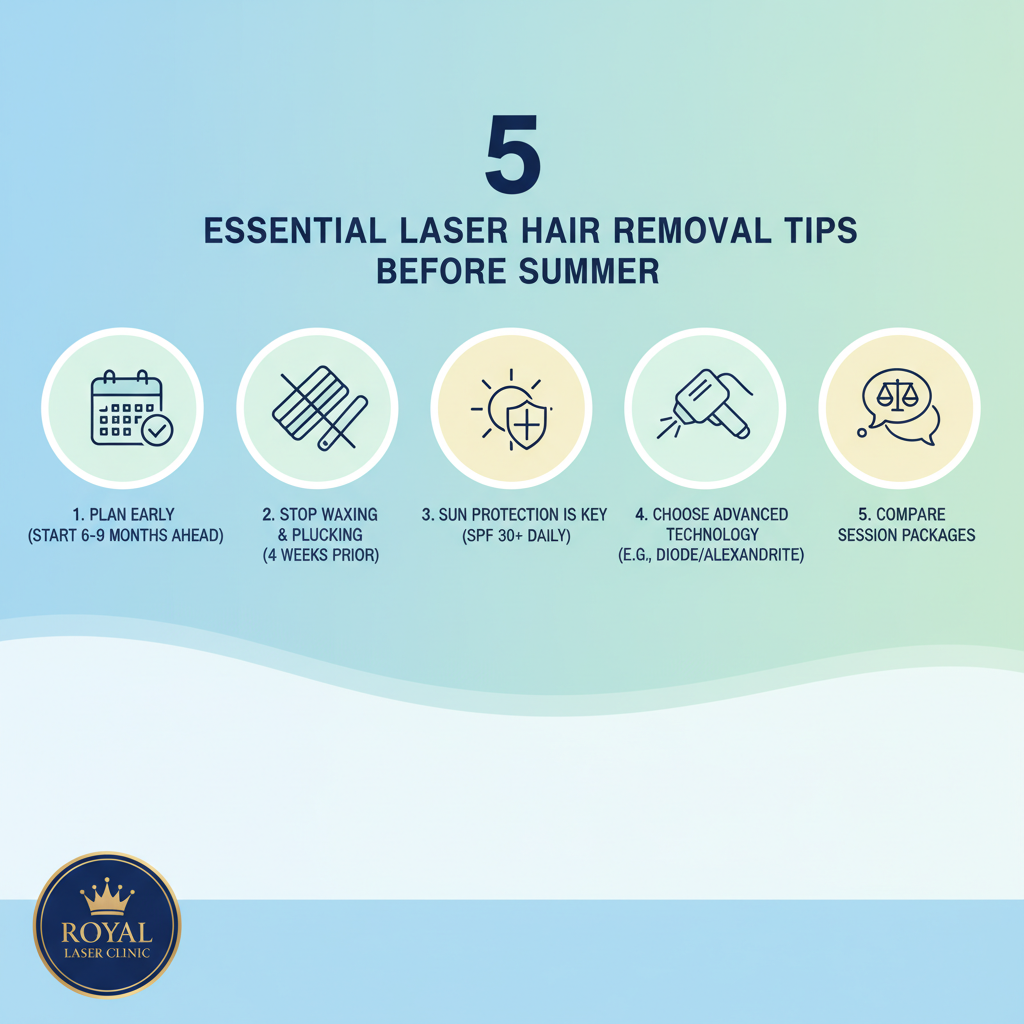
5 Telehealth-Smart Tips for Laser Hair Removal Before Summer
Plan Your Summer Skin Strategy Before the Calendar Gets Crowded
Laser hair removal before summer is not just a beauty appointment; it is a timed treatment plan. For telehealth-minded patients, the biggest advantage is preparation: understanding shaving rules, sun exposure risks, treatment spacing, medication considerations, and aftercare before arriving for an in-person laser session.
A helpful clinic-focused overview of 5 tips for laser hair removal before summer time explains why timing matters: laser treatment targets pigment in active hair follicles, and hair growth cycles mean results are progressive rather than instant.
In a telehealth setting, the laser procedure itself still requires an in-person visit with qualified providers and appropriate technology. However, remote education, intake questions, pre-treatment guidance, and follow-up conversations can help patients arrive better prepared and avoid preventable delays caused by recent tanning, waxing, irritation, or incorrect shaving habits.
Why Laser Hair Removal Needs More Planning Than Shaving or Waxing
Shaving can be done at home minutes before an event. Waxing can provide temporary smoothness but requires enough hair growth and may irritate the skin. Laser hair removal is different because it aims for gradual hair reduction by affecting follicles beneath the skin.
That is why a summer-focused plan should begin before peak beach days, vacations, outdoor workouts, and sleeveless clothing season. Telehealth-style preparation can help patients review key questions early, such as:
- Have you recently waxed, plucked, threaded, or used an epilator?
- Is the treatment area tanned, sunburned, irritated, or treated with self-tanner?
- Which areas are you considering: face, underarms, bikini line, legs, chest, back, or full body?
- Do you have a history of sensitivity, ingrown hairs, or razor bumps?
- Are you taking medications or using skin products that should be discussed before treatment?
For patients comparing options, clinic information about Laser Hair Removal can help clarify how professional treatment differs from short-term grooming methods.
Tip 1: Use Remote Preparation to Compare Laser, Waxing, and Shaving Honestly
A telehealth magazine audience is often interested in better decision-making before a procedure. Laser hair removal is a good example: the best choice depends on timing, comfort, skin response, maintenance preferences, and whether the patient is ready for a series of treatments.
Shaving
- Best for: Immediate grooming when the skin is calm.
- Limitations: Regrowth can feel rough, and frequent shaving may contribute to friction or razor bumps.
- Telehealth planning point: Patients should ask when to shave before an appointment and whether products such as deodorant, oils, or creams should be avoided on treatment day.
Waxing
- Best for: Temporary smoothness when someone is not actively preparing for laser treatment.
- Limitations: Waxing removes the root, which laser needs as a target beneath the skin.
- Telehealth planning point: If a patient has recently waxed, a provider may need to advise when laser treatment can reasonably begin.
Laser hair removal
- Best for: People who want progressive hair reduction and less reliance on repeated shaving or waxing.
- Limitations: Multiple sessions are usually needed because not all hairs are in the same growth phase at once.
- Telehealth planning point: Early screening can help identify sun exposure, skin irritation, or hair-removal habits that may affect the first appointment.
Tip 2: Stop Waxing and Plucking Before Your Laser Series
One of the most important pre-treatment instructions is also one of the easiest to misunderstand. Laser hair removal needs the follicle structure present under the skin. Waxing, plucking, threading, and epilating remove that target, which can make a session less effective.
Shaving is usually treated differently because it clears hair from the surface while leaving the follicle available for the laser. Before an appointment, patients are commonly advised to arrive with the treatment area shaved, clean, and free of heavy lotions, oils, deodorant, or self-tanner, depending on the area being treated.
This is where remote education is useful. A short pre-visit checklist can prevent a patient from arriving after waxing, applying self-tanner, or using irritating exfoliants too close to treatment.
Tip 3: Treat Sun Exposure as a Medical-Safety Question, Not Just a Beauty Issue
Summer laser planning must account for the sun. Recently tanned or burned skin may be more reactive during treatment, and providers need to understand recent exposure before selecting a safe approach.
Telehealth intake can help patients think beyond obvious beach days. Sun exposure can happen during driving, walking, patio dining, outdoor sports, gardening, or commuting. Areas such as the face, arms, legs, chest, neck, and shoulders may be exposed more often than expected.
- Before treatment: Avoid intentional tanning and disclose recent sun exposure or self-tanner use.
- After treatment: Keep treated skin calm, avoid harsh exfoliation, and protect the area from direct sun as advised.
- During a treatment series: Maintain consistent sun habits so the provider can plan treatment with safety in mind.
Tip 4: Ask About Technology, Skin Tone, and Suitability Before Booking
Laser hair removal is not one-size-fits-all. Skin tone, hair colour, treatment area, sensitivity, recent tanning, and medications can all affect whether treatment is appropriate and how it should be planned.
Royal Laser and Skincare Clinic uses Soprano Ice technology, which the clinic describes as suitable for a broad range of skin tones and hair types. Patients researching Permanent Laser Hair Removal should still expect an individualized consultation rather than a generic recommendation.
For telehealth readers, the practical takeaway is simple: ask technology questions before the in-person visit. Useful questions include:
- Which laser system is used?
- Is the technology appropriate for my skin tone and hair type?
- How does the provider assess recent tanning or irritation?
- Who performs the treatment, and how are settings adjusted over time?
- What should I do if my skin reacts after treatment?
Patients considering back, chest, beard-line, shoulder, or full-body treatments may also want to review information about Laser Hair Removal for Men.
Tip 5: Understand Packages, Touch-Ups, and Follow-Up Support
Laser hair removal planning should include more than the first session. Hair density, hormones, body area, skin response, and growth cycles can affect how treatment progresses. That is why patients should compare how clinics structure care.
Some clinics sell fixed bundles, while others review response over time. Royal Laser and Skincare Clinic states that its care model includes unlimited sessions until the desired outcome is achieved, plus lifetime free touch-ups under its results guarantee structure. Patients should always ask for clear details before committing so they understand what is included and what may require additional payment.
Questions to ask during consultation include:
- Session planning: Is treatment sold as a fixed package or adjusted based on response?
- Touch-ups: Are future maintenance visits included or billed separately?
- Aftercare: Will I receive written instructions for shaving, exfoliation, workouts, deodorant, products, and sun protection?
- Follow-up: Who should I contact if redness, irritation, or uncertainty occurs after treatment?
- Scheduling: How far apart are sessions typically planned for the treatment area?
What Telehealth Can and Cannot Do for Laser Hair Removal
Laser hair removal itself is an in-clinic procedure. A device must be used directly on the skin by a trained provider in an appropriate treatment environment. Telehealth cannot replace that part of care.
However, telehealth-style support can improve the patient journey before and after the appointment. It can help with:
- Pre-treatment education about shaving and avoiding waxing
- Screening questions about sun exposure, self-tanner, irritation, and medications
- Explaining what to expect during the first session
- Reviewing aftercare instructions
- Helping patients decide whether to delay treatment after tanning or irritation
- Answering general questions about treatment areas and maintenance expectations
The safest model combines remote convenience with responsible in-person assessment. If anything about the skin looks irritated, recently burned, unusually sensitive, or medically concerning, the provider should evaluate whether treatment should proceed.
What to Expect at the First In-Person Laser Appointment
A first laser hair removal session should begin with a review of skin tone, hair growth, treatment area, recent sun exposure, medications, and previous hair-removal methods. The provider should confirm that the area is ready before treatment begins.
During treatment, the area is typically cleaned and the laser device is moved across the skin in a controlled pattern. With Soprano Ice, integrated cooling is used to improve comfort during treatment. Sensation can vary by body area, hair density, and individual sensitivity.
After the appointment, some patients may notice mild warmth or redness. A responsible provider should explain how to care for the area, when to shave again, when to avoid exfoliation, how to manage workouts or deodorant use, and how to protect the treated skin from sun exposure.
Laser Hair Removal Before Summer: A Patient Checklist
Before booking or attending a summer laser hair removal appointment, patients can use this checklist to reduce avoidable scheduling problems:
- Start planning several weeks or months before major summer events when possible.
- Stop waxing, tweezing, threading, and epilating before treatment as advised.
- Shave the treatment area according to clinic instructions.
- Avoid intentional tanning and disclose recent sun exposure.
- Do not apply self-tanner to the treatment area before sessions unless cleared by the provider.
- Ask whether the laser technology is suitable for your skin tone and hair type.
- Clarify the clinic’s session structure, touch-up policy, and aftercare support.
- Keep treated skin protected and calm after appointments.
When to Contact the Clinic
Patients should contact the clinic before treatment if they have recently tanned, burned, waxed, used self-tanner, developed irritation, started a new medication, or are unsure whether the area is safe to treat. It is better to ask early than to arrive for an appointment that may need to be postponed.
For treatment questions, timing, areas, comfort, or care instructions, Royal Laser and Skincare Clinic can be contacted at 905-237-3242 or info@royallaserclinic.com.
Planning laser hair removal before summer?
Ask about consultation options, treatment timing, skin preparation, and aftercare before your first session.
FAQs About Laser Hair Removal Before Summer
How early should I start laser hair removal before summer?
Starting several weeks or months before summer gives more room for proper session spacing. Hair grows in cycles, so multiple treatments are usually needed for more noticeable reduction across the treatment area.
Can telehealth replace an in-person laser hair removal appointment?
No. The laser procedure must be performed in person with appropriate equipment and trained providers. Telehealth-style support can still help with education, preparation, screening questions, and aftercare guidance.
Can I wax before laser hair removal?
Waxing, plucking, threading, and epilating are usually avoided before laser hair removal because they remove the follicle target. Shaving is typically preferred because it removes surface hair while leaving the root structure beneath the skin.
Can I get laser hair removal with a tan?
Recent tanning can make skin more reactive. A provider should assess the area and may recommend waiting until the skin has settled. Patients should disclose sun exposure and self-tanner use before treatment.
Will I still need to shave after my first laser session?
You may still need to shave between early sessions. Laser hair removal works progressively, and regrowth may become lighter, softer, or less dense over time depending on the individual and treatment area.